
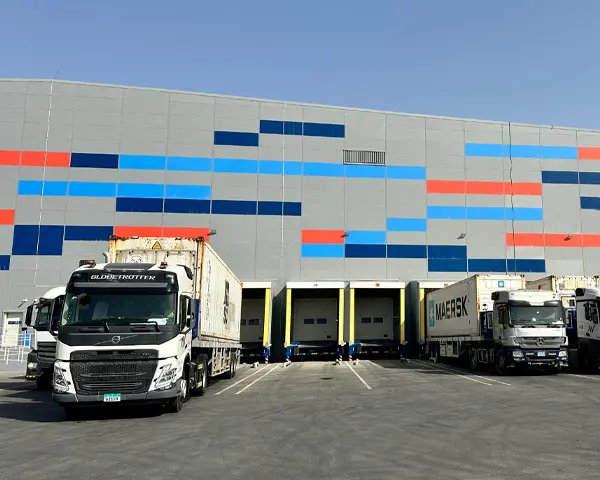
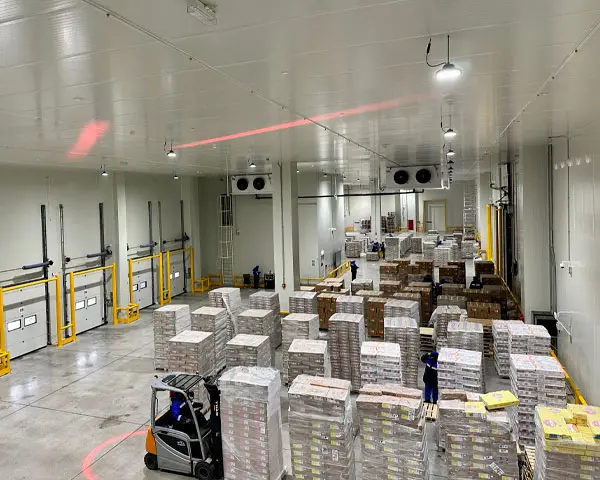
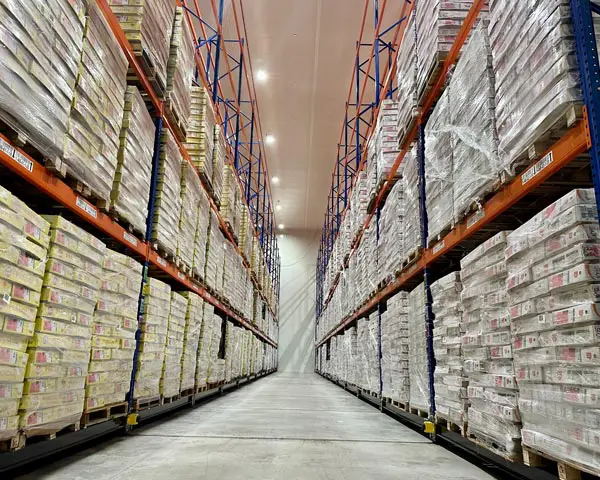
NOATUM LOGISTICS - Warehouse in KEZAD
Our logistic center in KEZAD meets the highest standards in terms of operation, safety and environmental sustainability
Our logistic center in KEZAD is strategically located between Dubai and Abu Dhabi. With more than 18,000m2 total area and 6 different chambers with individual temperature control, our KEZAD warehouse can store any type of reefer cargo.
We customise cross-docking and warehouse operations ensuring we meet and exceed our clients’ strict requirements for security, safety, and temperature control.
Our temperature-controlled warehousing services are supported by a versatile fleet of refrigerated transport vehicles. With Noatum Logistics, you get a seamless one-stop solution for your reefer supply chain needs.
You can trust our professional warehouse management and contract logistics team in building a reliable and cost-effective solution to meet your distribution requirements.One major benefit to using a hay feeder is that it reduces the amount of hay lost due to waste. A study conducted at the University of Minnesota found that using round bale feeders results in significantly less hay wasted by horses. Nine different commercial round bale feeders were all found to reduce hay waste when compared to round bales fed directly on the ground. When the bales were fed on the ground, researchers found that 57% of the hay was wasted, compared with 5-33% hay waste when using different types of hay feeders. Furthermore, financially the feeders paid for themselves in 1-20 months when the amount of hay that would have been lost without the use of the feeder was considered. More details about this study are available on the University of Minnesota website. A similar horse study was conducted at Sam Houston State University with round bales and ring feeders (a specific type of round bale feeder). When hay was fed in a ring feeder, only 5.5% of the hay was wasted, but when the hay was fed without a ring feeder, about 35% of the hay was wasted. Another study at the University of Minnesota (read more) found that when hay was fed in small square bale feeders (such as basket, slat, and bunk feeders), less hay wastage occurred (1-5% wastage) compared to when horses were fed hay on the ground (13%). Because hay (and money) was saved with the use of any type of small square bale feeder, the feeders paid for themselves between 9-12 months. While hay wastage when feeding from small bales has been observed to be lower than that from round bales, it is clear that hay feeders can reduce the waste of hay in your pastures and dry lots no matter the size of hay bale you plan to feed.